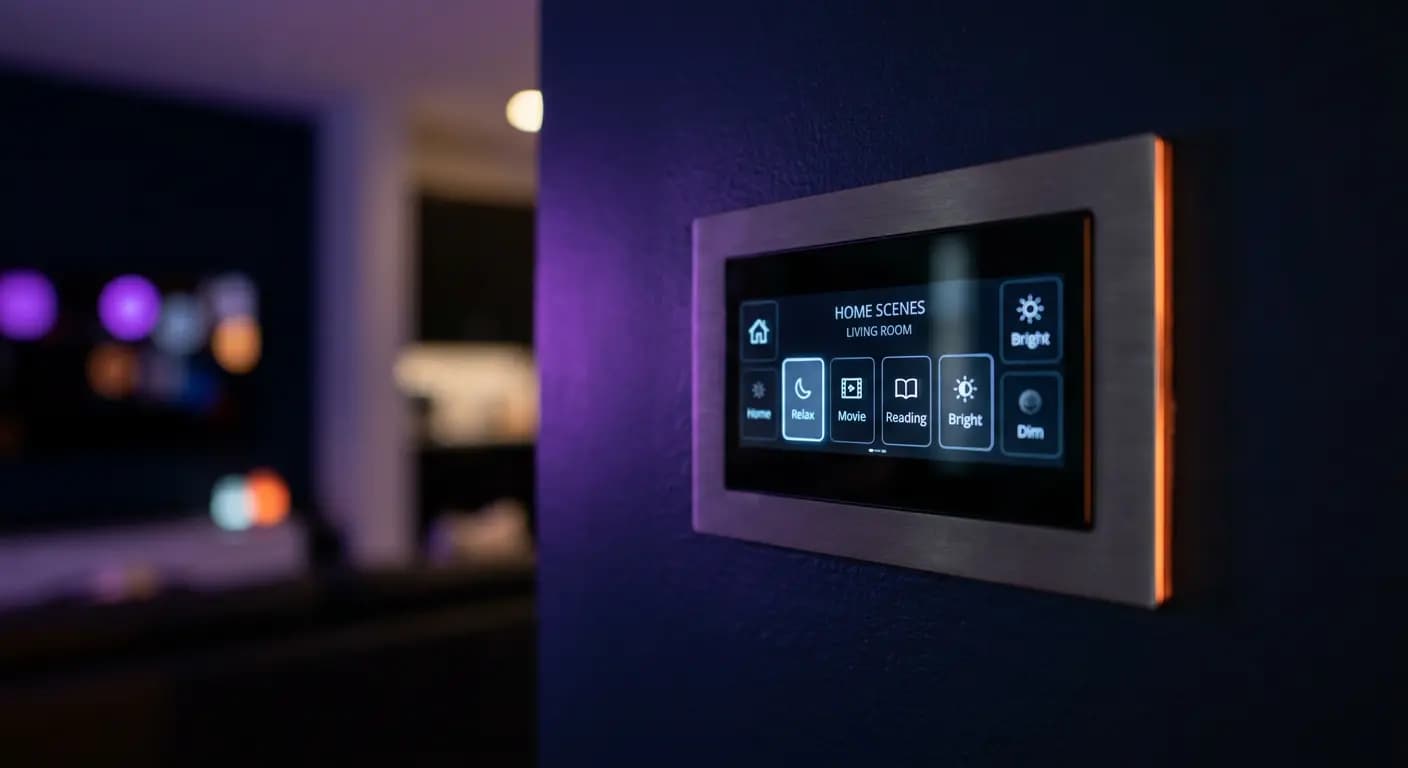
Smart Home Automation in Seattle
Redefine comfort with smart home automation — lighting, climate, security, and entertainment unified under intuitive control.
Your Home, Intelligently Automated.
LLUMINET designs and installs systems built around Matter, the cross-brand smart home standard, as well as proprietary platforms like Control4 for clients who want the highest level of integration. Seattle homeowners deal with more gray, low-light days than most of the country — properly designed circadian rhythm lighting and automated shading makes a measurable difference from October through April. Your system grows with you: add devices, rooms, and automations without replacing infrastructure.
FAQ
Answers To The Frequently Asked Questions.
Control4 is a professional platform offering the deepest integration and most reliable performance — designed for permanent installations, not consumer self-setup. Apple HomeKit and Google Home are excellent for straightforward setups with standard devices. For multi-room, multi-system integration or whole-home automation, Control4 is the clear choice.
Matter is an open smart home standard backed by Apple, Google, Amazon, and hundreds of device manufacturers. Devices with Matter certification work across all major ecosystems — you're not locked into one brand. LLUMINET installs Matter-compatible infrastructure wherever possible.
Yes — most smart switches, thermostats, and sensors are retrofit-compatible. No rewiring required in most cases, though neutral wires may be needed for some smart switch installations.
Lighting, thermostats (Ecobee, Nest), smart locks, motorized shades, security cameras, door sensors, garage doors, whole-home audio, televisions, and more.
Design first: which rooms, which devices, and which platform fits how you live. Then installation of the switches, thermostats, sensors, shades or keypads and any wiring they need, followed by programming the scenes and schedules, testing everything, and showing you how to use it. Our licensed electricians handle any line-voltage work, such as smart switches that need a neutral wire.
We start with a consultation about your routines and what you actually want automated, then give you written recommendations with clear options. Single-room setups, like a smart thermostat or lighting control, usually take a few hours. Whole-home projects typically take one to three days depending on complexity, and you get a timeline before we start. The last step is programming and a walkthrough of the app and controls.
Scope and platform. Starting with one room or one system, like lighting, is a much smaller project than whole-home control, and a consumer platform like HomeKit or Google Home costs less than a professional Control4 system. The number of devices, whether switch boxes need neutral wires, and how much scene programming you want all factor in. You can start small and expand later without replacing what's there.
Yes. Many smart home problems are really Wi-Fi problems: devices dropping offline, slow responses, and automations that fire late or not at all. Wired access points and a separate network for smart devices make the whole system more reliable, which is why we often design the network and the automation together.
Ready to Get Started with Home Automation?
Contact us today for a free estimate on your project.