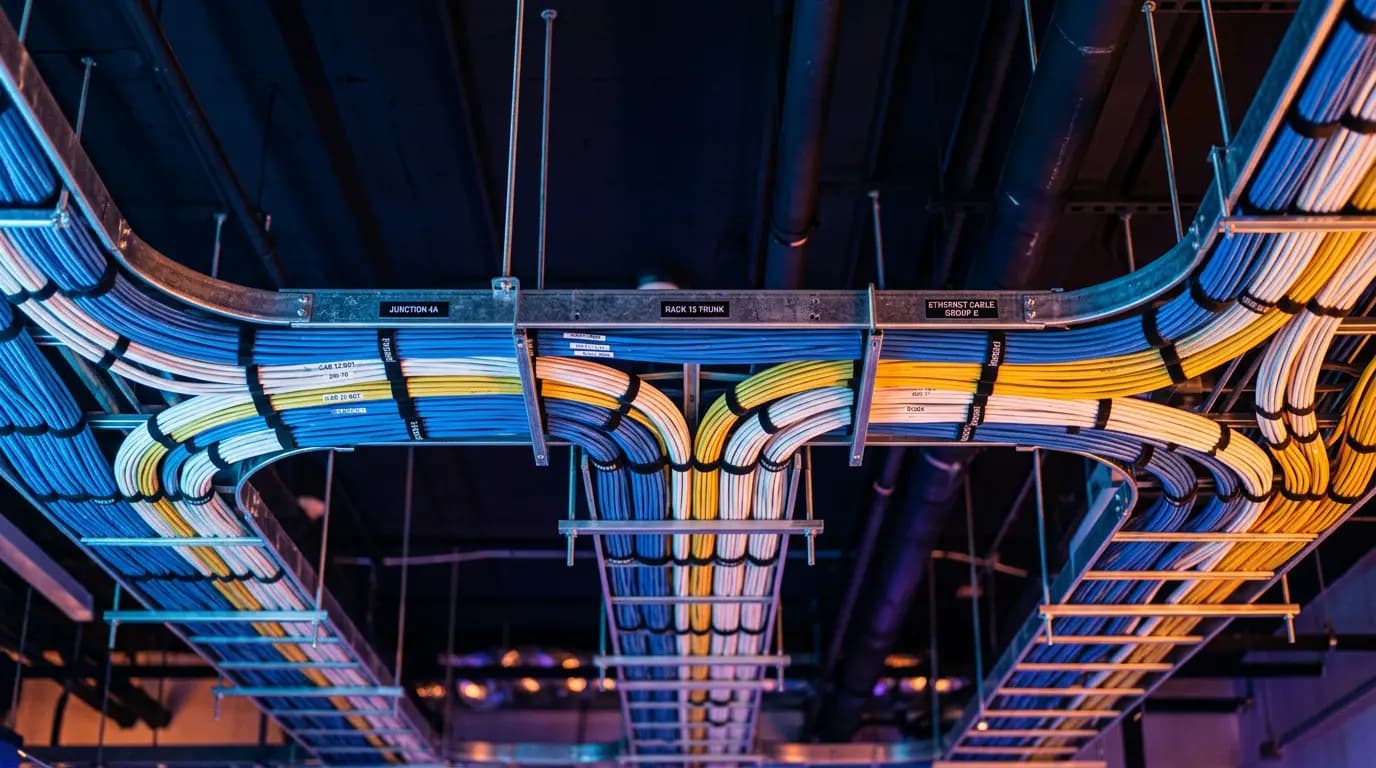
Low-Voltage & Network Cabling in Seattle
Professional Cat6, Cat6A, and low-voltage structured cabling — clean runs, proper terminations, fully documented.
Ethernet-to-the-Edge Networks
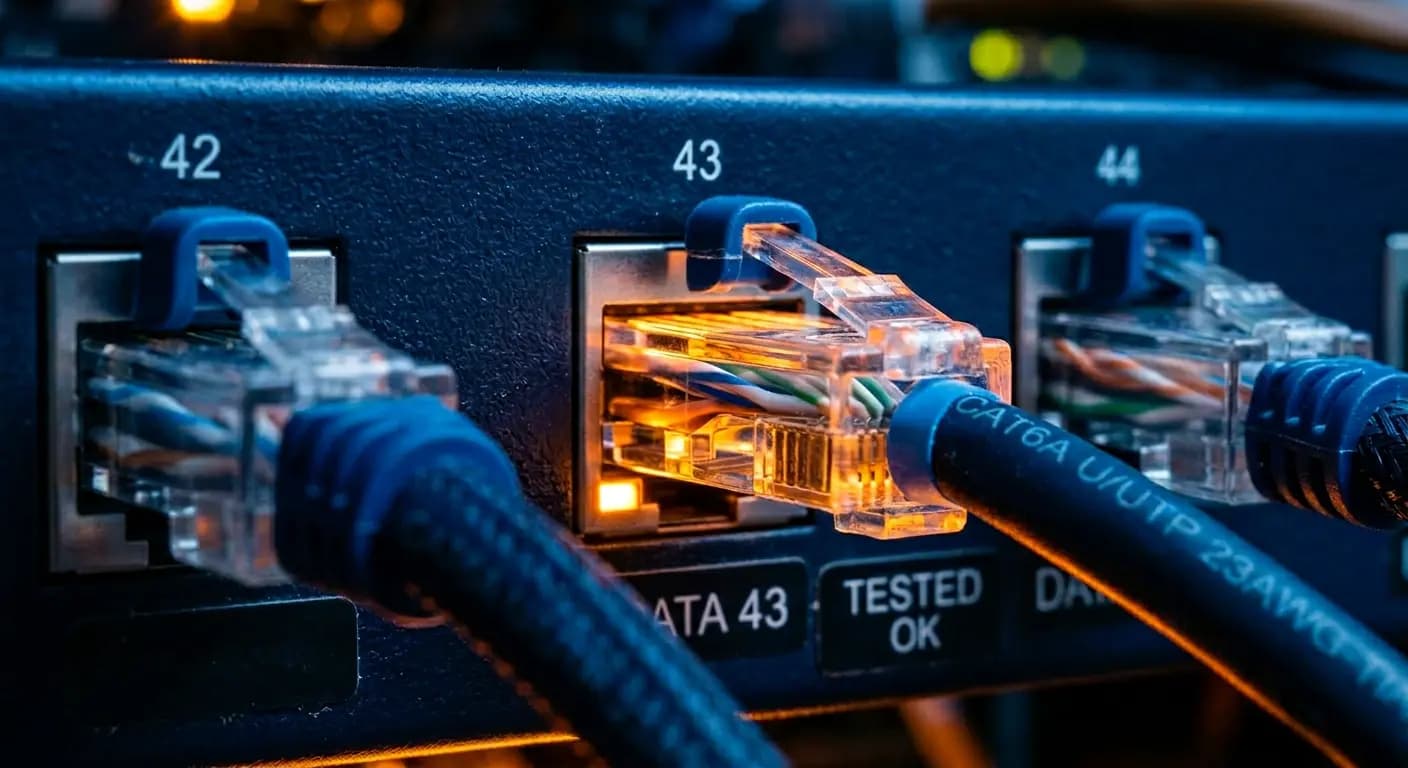
Bespoke ethernet and low-voltage wiring solutions designed for homes and businesses across Greater Seattle. Whether you need a single Cat6 drop in a home office or full data cabling for an office, retail space or warehouse, LLUMINET designs and installs for long-term reliability — quality components, clean cable management, no hidden fees. All drops are tested to TIA standards, labeled, and terminated in patch panels. We document every run so you know exactly what's in your walls.
FAQ
Answers To The Frequently Asked Questions.
Cat5e supports up to 1Gbps and is suitable for basic use. Cat6 supports 10Gbps up to 55m and is the current standard for new installations. Cat6a supports 10Gbps over 100m and is recommended for future-proofing, long runs, and PoE applications.
In most cases, no permit is required for low-voltage data cabling in residential settings. Commercial projects may have additional requirements depending on scope.
Yes — we run cables through existing walls, attic spaces, and crawlspaces using fishing techniques that minimize drywall impact.
We recommend at least one drop per room for stationary devices, plus dedicated drops for televisions, gaming consoles, and access points. We'll map this out during consultation.
Cable from a central spot to each jack, the jacks and wall plates, termination at a patch panel or wall plate on the central end, and testing of every run. Each drop is labeled at both ends, and we document every run so you know what's in your walls. Where we have to cut, openings are kept to single or double gang size so they can be covered with plates; we don't patch or paint.
One run with attic, basement or crawlspace access usually takes a couple of hours. A typical house with 6 to 12 drops is one or two days. One or two hard runs, through plaster or a blocked wall, usually decide the schedule more than all the easy ones combined.
The number of drops, the length of each run, and the path. Open attics and crawlspaces are quick; plaster, finished basement ceilings and blocked walls take longer. Cable type matters less than people expect, since Cat6 is right for most data runs and Cat6A is mainly for long ones. Deciding where every cable ends before install day also saves time. You get a written estimate before any work starts.
Yes. We cable offices, retail spaces, clinics and warehouses: Cat6 and Cat6A data drops, access point and camera runs, fiber between buildings or floors, racks and patch panels. Every run is tested, labeled and documented, and we can work after hours so your business stays open.
Often, yes. Many homes have existing Cat5e or Cat6 runs, sometimes landing in a structured wiring panel nobody uses. We trace and test every run before pulling anything new. Cat5e that tests clean carries multi-gig speeds over normal house-length runs, so there's no reason to replace a working drop just because it's old.
Related Reading
How Many Ethernet Drops Does a New Seattle Home Actually Need?
A room-by-room breakdown of how many ethernet drops to run during new construction or a remodel — and the common regrets homeowners share later.
Cat6 vs Cat6A: Which Should You Install in Your Seattle Home?
Both run 10 Gbps — the difference is how far. Cat6 gets you 55 meters, Cat6A gets you 100. Here's when that actually matters.
How to Set Up a Proper Home Network Closet (Patch Panel, Switch, UPS)
Step-by-step guide to building a clean home network closet — rack sizing, patch panel, switch, UPS sizing, and cable management.
Ready to Get Started with Wiring Services?
Contact us today for a free estimate on your project.