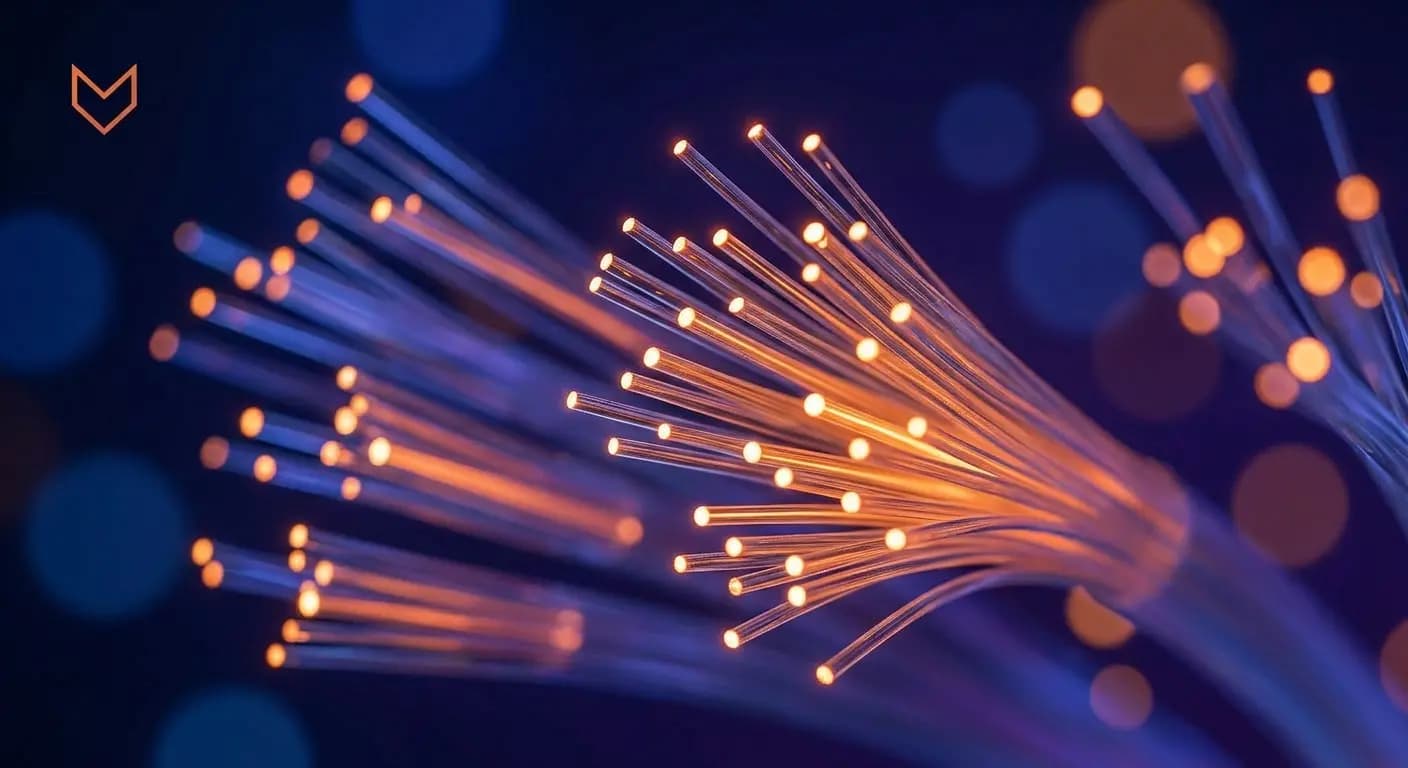
Fiber Optic Cabling in Seattle
Single-mode and multi-mode fiber installation with OTDR testing — BICSI-compliant, certified, and documented.
Future-Proof Your Network
Cat6 is the right call for today's typical installation. Fiber is the right call for the next 20+ years. As multi-gig internet, Wi-Fi 7 access points, and 10Gbps+ internal networks become the norm, fiber backbone cabling is the highest-performance infrastructure investment available. LLUMINET is BICSI-compliant on every installation — proper bend radius, protective conduit, labeled terminations, and OTDR testing with a full certification report provided at project close. We also install outside plant (OSP) armored fiber for connecting detached ADUs, workshops, and outbuildings.
FAQ
Answers To The Frequently Asked Questions.
For most homes, Cat6a is sufficient. Fiber makes strong sense for new construction, long runs (100m+), inter-building connections, or anyone who wants infrastructure that won't need replacement for 20+ years.
Yes — outside plant (OSP) armored fiber is designed for direct burial and weather exposure. This is the cleanest, most reliable way to connect a separate structure.
We use OTDR (Optical Time-Domain Reflectometer) testing to verify signal loss, locate faults, and certify performance on every run. A test report is provided at project close.
Route planning, the fiber itself (single-mode or multi-mode, depending on the equipment it connects), protective conduit where the path needs it, terminations and patch panels at both ends, labeling, and OTDR testing of every run with a certification report at project close. For outbuildings, we run outside plant (OSP) armored fiber rated for burial and weather exposure.
We start by looking at both ends: where the network equipment lives now, and where the fiber needs to reach — another floor, a rack across the building, or a detached ADU or shop. We plan the route with proper bend radius and protection, run and terminate the fiber, then test and certify each run with an OTDR before any equipment is connected. For a buried run, the work starts with a utility locate (811) before any digging.
Distance, the route (inside walls, through existing conduit, or buried to another building), how many strands and terminations you need, and the equipment at each end. For an outbuilding, trenching and conduit can be a bigger factor than the fiber itself. You get a written estimate once we've seen both ends and the path between them.
Cat6A carries 10 Gbps up to 100 meters and can power devices over PoE; fiber can't carry power. Fiber makes sense for runs past 100 meters, between buildings, or for backbone links where you want headroom well beyond 10 Gbps. Many projects end up with both: fiber for the backbone and copper to the rooms, access points and cameras.
Yes. Each end of a fiber run needs a switch or device with a fiber port, usually an SFP or SFP+ slot, or a media converter that changes fiber to copper Ethernet. We specify and install that equipment with the fiber so the link works end to end.
Yes. Fiber can be fished through walls, attics and crawlspaces like other cable, as long as the route respects its minimum bend radius. It's a common way to connect a new rack, a far floor or an outbuilding without replacing the copper that already works.
Ready to Get Started with Fiber Optic Cabling?
Contact us today for a free estimate on your project.