If there's an attic above the room or a crawlspace or unfinished basement below it, you can usually get real wired rear speakers with no visible wire; with a finished floor on both sides, it's wire along the baseboard or wireless rears that still need an outlet. In existing rooms we fish speaker wire from the attic or from below the same way we run network cable, and the speaker cutout itself is the opening. Rooms with another finished floor above take more planning, and sometimes there's no clean route. That's the whole decision. The rest is details.
You also don't need ceiling speakers to get surround sound. Rears sound right at seated ear height, and overhead speakers are a separate layer you can add later or skip. Our audio and video page covers what a TV-room setup involves.
Three things to check before you buy anything
Go up and go down. Is there an attic hatch over this room, or a crawlspace or open basement ceiling under it? Those are the easiest paths even when the run is longer, because inside a finished wall you hit fire blocks and bracing.
Then look behind the couch. Is there an outlet near where the rear speakers would go, about 10 feet from the main seat? Wireless rears plug in. No outlet there means a cord across the floor or a new outlet.
Then look at the back of the TV. Check for an HDMI port labeled eARC. Without it, a soundbar with rears won't give you the full sound.
Also think about where the equipment lives. If the receiver and sources sit in a cabinet or closet elsewhere, we run the cables there so only the screen is on the wall.
Where the wire can go
With an attic or crawlspace, the wire comes down or up inside the wall to the speaker opening. We fish speaker, HDMI and network cable the same way, so if you're also getting cable to other spots, the wiring services page covers that side.
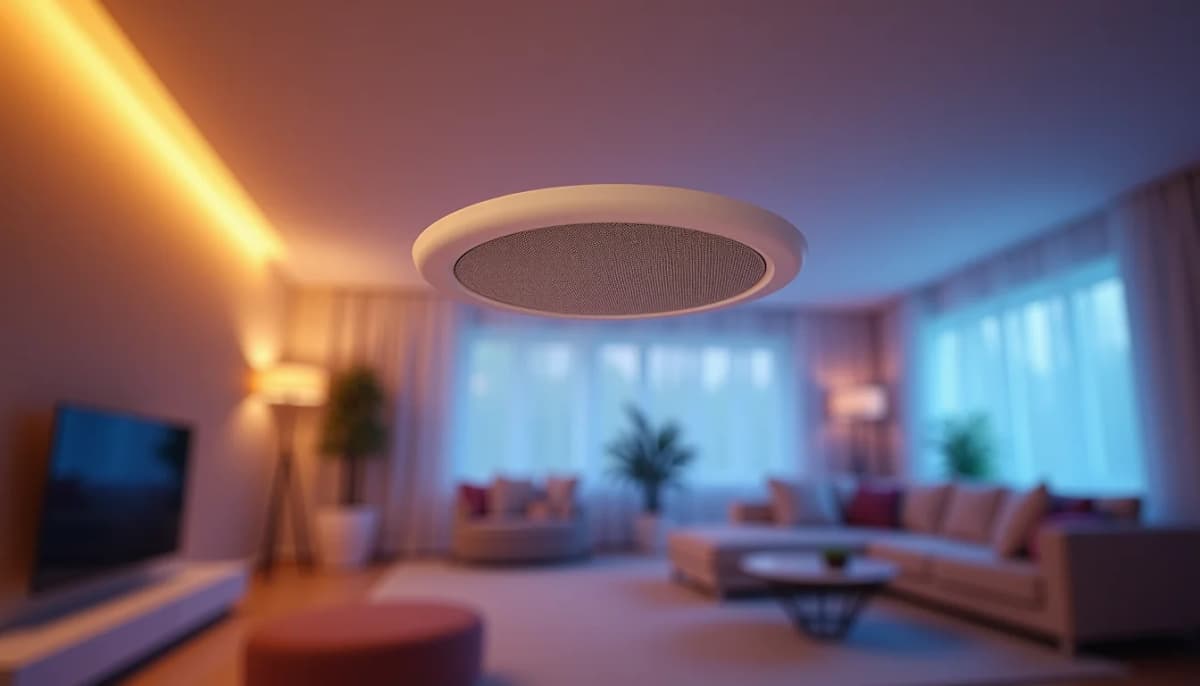
One catch with attics: the ceiling is the easy place to put a speaker from above, but it's the wrong place for the rears. Rears belong at seated ear height. Overhead speakers are their own height layer for Atmos. So the attic can make height speakers easy, but the rears still go at ear level.
If you want height sound but there's a floor above, upward-firing Atmos speakers skip the ceiling cut. They bounce sound off the ceiling, so they need a flat ceiling, not vaulted.
Plaster changes things. In an older Seattle Craftsman with lath and plaster, the attic and the basement or crawlspace matter even more, because plaster is denser than drywall and harder to work through. And if the attic has old vermiculite insulation, assume it contains asbestos and shouldn't be disturbed, so that attic may not be the route.
The TV wall usually needs power too. Cables run through the wall for a clean look, and we can move an outlet behind the TV. Because we do both low-voltage and electrical work, that can be part of the same project instead of a separate contractor visit.
No hidden path: visible wire or wireless rears
A room with bedrooms above and a finished basement below has no easy hidden path for the wire. That leaves a few options.
Wire along or behind the baseboard. Run speaker wire along the baseboard with tacks, or inside a paintable raceway. Don't put it under the carpet where people walk; foot traffic wears through the insulation. The other option is pulling the baseboard and running the wire in a channel behind it, which keeps it out of sight. Either way you keep real wired speakers that don't depend on Wi-Fi. The cost is a visible line or a baseboard job.
Wireless rears. "Wireless" only means no speaker wire. A few run on batteries, but most plug in. A soundbar like the Sonos Arc Ultra only gets real rear channels when you add a pair, like two Era 100s at $438 the pair, and each one has its own power cord. A power cord is harder to hide than speaker wire, which is why the outlet check matters.
Skip the wireless rear kits for a regular receiver. You still need an outlet for the kit at the back of the room, and you still run speaker wire from it to each speaker.
Wireless rears also drop out. Owners of more than one brand report it, even with the router in the same room. One Sonos owner on a forum had rears cutting out after plugging the soundbar into Ethernet, and the dropouts stopped when they turned the bar's Wi-Fi back on. So don't turn off the soundbar's Wi-Fi, even if it's wired.
What the overview appointment settles
It starts with an overview appointment in the room itself: the light, the size, the seating, and where the equipment can live. That's when the above-and-below question gets answered for real, and you get a written estimate after that visit.
Have questions about your project? Contact us for a free estimate.