You don't need more extension cords or a box of solar stakes for a Seattle winter; you need a GFCI-protected outdoor outlet where the lights actually go. For path lights, that outlet runs a wired low-voltage transformer instead of solar.
The cords are the part to let go of first. ESFI counts about 3,300 home fires a year that start in extension cords, and says leaning on them heavily is a sign the house has too few outlets. That's the actual problem, and it's the one worth fixing.
Where to put an outdoor outlet for holiday lights
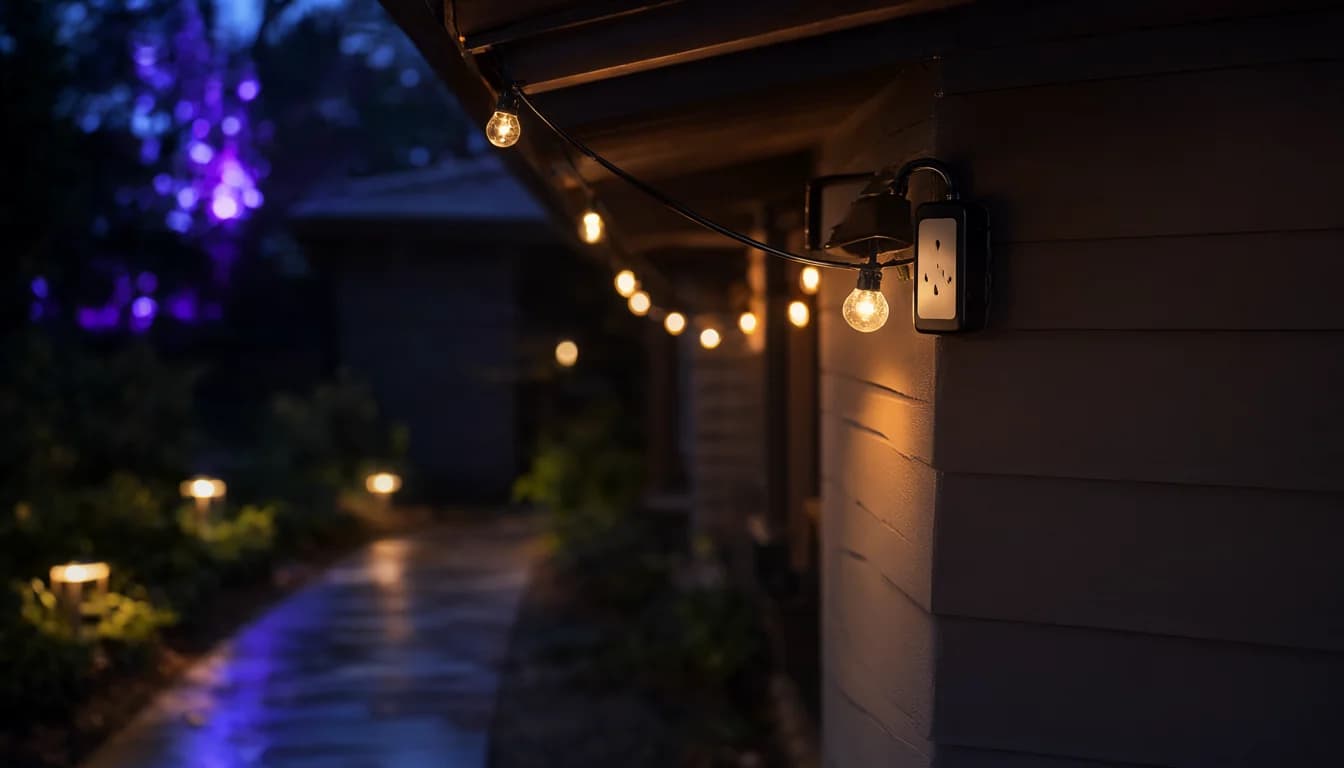
Start with where the lights are, not where the nearest outlet happens to be. For holiday lights that usually means up high, under the eave or soffit, so the strings plug in at the roofline instead of running down the siding to one outlet by the back door.
Decide how you want to turn them on before the wiring goes in, not after. If you want the lights on a timer or a switch inside, that changes where the wire runs, and it's much easier to plan than to add later.
Today's code asks for an outdoor outlet at the front and back of a house, but the code normally only applies when a house is built or substantially renovated. So an older house may have fewer outdoor outlets than you'd expect, and they may not be where the lights go.
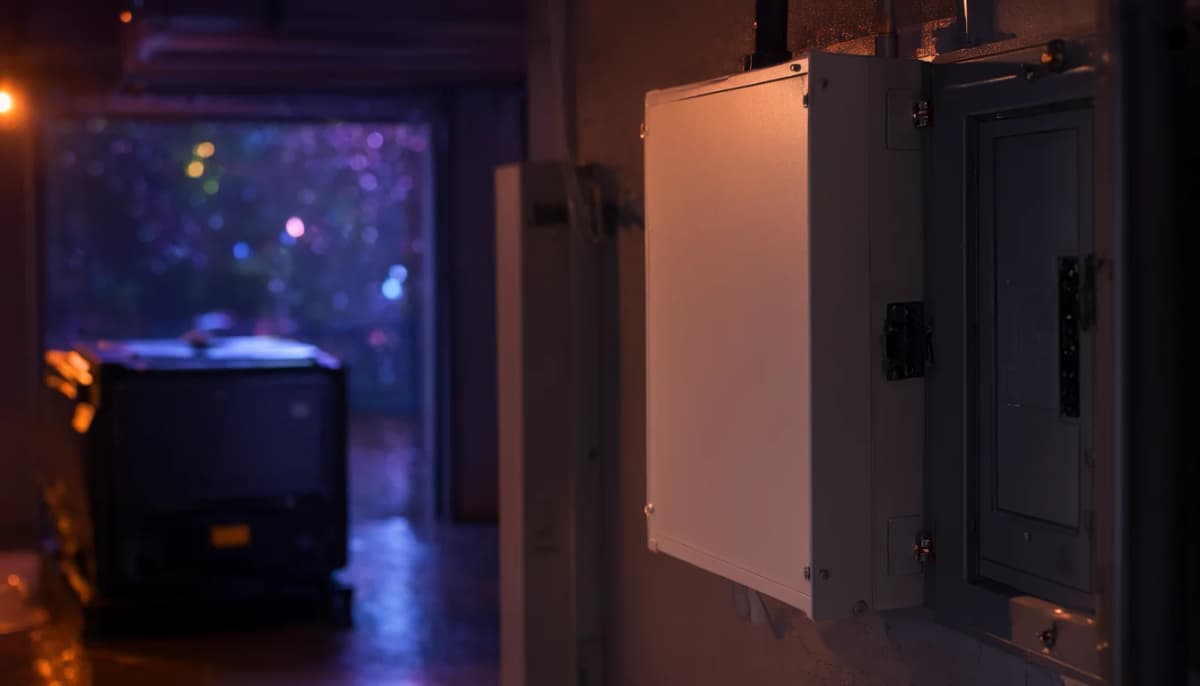
Three things decide how much work a new outlet is: whether the panel has room for the new circuit, how far the panel is from the outlet, and how easy the path between them is. If you're not sure about the first one, that's what an electrical panel assessment answers. An eave outlet over a garage with an open attic is a much shorter job than one on the far side of a finished house with no attic access.
When the outdoor outlet keeps tripping
A GFCI is the outlet with the TEST and RESET buttons. It shuts itself off when it senses current leaking, which is exactly what you want from an outlet that lives in the rain. Every outdoor outlet should have one.
So when it trips in wet weather, it's usually telling you something about what's plugged into it. To find the bad light string, reset the GFCI and plug the sets back in one at a time until it trips. The one that trips it is the one to replace.
If the GFCI itself has failed, replace it with a new weather-resistant GFCI. Don't remove it. Swapping out old outdoor GFCIs is part of the outlet upgrades we do.
Look at the cover while you're out there. An outlet out in the rain has to stay weatherproof with a cord plugged in. If yours has a flat flip-up cover, swap it for the bubble cover that closes over a plugged-in cord.
The one self-check worth doing: press TEST once a month and after a power outage. A lamp plugged into it should go out. Then press RESET.
Low-voltage landscape lighting vs solar path lights
Solar stakes look like the easy answer until December, when the sun sets in Seattle at 4:20 pm.
Wired low-voltage lighting is the plain alternative. A transformer plugs into a GFCI outdoor outlet and steps 120 V down to 30 V or less for the fixtures. Two things to know before you buy one:
- Size it with room to spare. Add up the fixture wattage and keep it at or under 80% of the transformer's rating, so 240 W of lights on a 300 W unit. If you think you'll add fixtures later, go bigger now.
- The cable gets buried. Low-voltage landscape cable goes about 6 in deep, so plan where the runs go before the beds get planted.
In Washington, the outlet that feeds the transformer has to be installed by a licensed electrician. The low-voltage side can skip the license and permit, but only when the transformer is a listed Class 2 unit, nothing runs through fire-rated walls or floors, and nothing is in a pool or fountain. So the outlet is the electrician's part even when the path lights aren't.
If anyone is digging for the cable, Washington's dig law says to mark the area in white and call 811 at least 2 and no more than 10 full business days before digging. The only exception is an owner or occupant digging less than 12 in deep on their own noncommercial property. A contractor always has to call.
What to expect from us
We start with a site visit to see the panel, the existing wiring and where the outlets and lights will go, and you get a written estimate that spells out what's included. We pull the permit, do the work and schedule the inspection, and we're present for the final.
We handle the electrical and the low-voltage side under one contractor, so the eave outlet, the outlet the transformer plugs into and the path lights can be one project, along with the rest of our lighting services.
On the walkthrough, these are the questions we'll ask you:
- Is there attic access above the eave where you want the outlet?
- Do you want the holiday lights on a switch inside or on a timer?
- How many outdoor outlets do you have now, and what kind of covers are on them?
- Where do the path lights need to go, and is anything planted there yet?
Have questions about your project? Contact us for a free estimate.