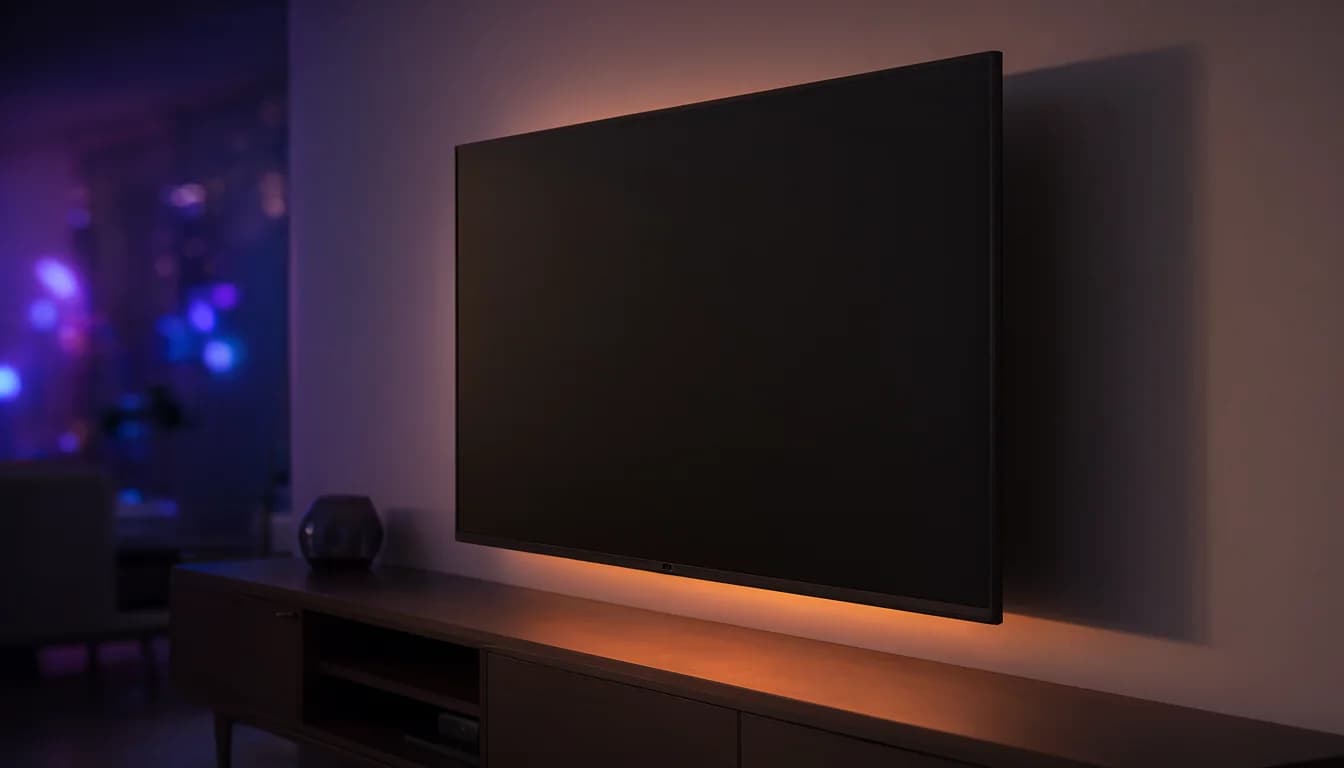
The clean way to hide TV cables is a recessed box behind the screen, power on in-wall rated wire (never the TV's own cord), and HDMI and network cable fished inside the wall. You probably need fewer cables than you think: if you have a receiver, plug the sources into it and run one HDMI cable, the eARC one, to the TV. Where that cable ends up depends on one question: where does the rest of the equipment live? If it sits on a media cabinet right under the TV, the cables drop a few feet down the same wall to a second plate behind the furniture. If it lives in a cabinet or closet elsewhere, we run the cables there, so only the screen is on the wall.
Where the equipment goes: under the TV or in a closet
Under the TV is the simpler job. The cables can usually stay in one stud bay, from the box behind the screen to a plate just above the floor, hidden by whatever furniture sits below.
A cabinet or closet elsewhere is cleaner to look at and more work to build. The cables have to get from the TV wall to the equipment, so we fish them from the attic or from below. It's a bigger job, so decide this before anyone drills.
Distance also changes the HDMI cable. For 4K at high frame rates, get a certified Ultra High Speed HDMI cable, the kind with a scannable label on the box. Across one wall, a normal passive cable is fine. A long run to a closet across the house may need an optical HDMI cable.
Don't pay for a bundle of HDMI cables in the wall. One HDMI from the receiver, a network cable if the TV is going to stream, and power. That's it. Fewer cables means smaller holes and less to go wrong. Skip the HDMI wall-plate jacks too. eARC tends to get finicky over joined cables, so a straight run through a brush plate is the safer choice.
Power behind the TV: in-wall kit or a real outlet
The TV's power cord, or an extension cord, can't go inside the wall. The electrical code doesn't allow it, no matter how neatly it's done.
You have two options:
- An in-wall power kit. A short cord plugs into the outlet near the floor and feeds a recessed inlet. In-wall rated wire runs up to a recessed outlet behind the TV. It doesn't tap your house wiring, and some kits include a separate opening for the HDMI and network cable. One kit was listed around $63 on Amazon. Check the wall depth first: one kit needs 3.25 inches inside the wall.
- A real outlet behind the TV. We can relocate an outlet behind a TV if needed. That's real electrical work, so it needs a permit. We pull the permit and we're there for final inspection. The HDMI and network cable usually don't need one.
Because we handle both the low-voltage and the electrical work, it's one contractor for the whole wall, not an electrician and an AV installer trading appointments.
Behind the screen: the box, the mount and the wall
The box behind the TV is what makes it look right. A typical tilt mount sits only about two inches off the wall, and a plug sticking out of a normal outlet can keep the TV from sitting flat. A recessed TV box sets the outlet and the cable opening back into the wall. Pair it with a mount that has an open wall plate, so the box isn't covered by steel.
The mount goes into studs. Studs often don't land where you want the TV centered. A mount with side-shift lets the TV slide over to center while the bracket stays on the studs.
Then there's what's inside the wall, which nobody knows for sure until they look. There may be a board running across the inside of the wall, called a fire block. Stair framing on the other side of a wall can put a diagonal board right through the path. When something's in the way, the choices are to move the drop over a bay or open the wall. Where we have to cut, the openings are kept to single or double gang size so they can be covered with plates. We don't patch or paint.
Older Seattle houses add one more thing: plaster on lath. It can be done without wrecking the plaster, but it's slower, more deliberate work than drywall. We route through closets, basements and attics first.
What to have ready for the walkthrough
An AV project starts in the room itself. We look at the light, the screen size, the seating, and where the equipment can live. It helps to know a few things going in:
- Where the gear goes: under the TV, a cabinet, or a closet. If it's a closet, which one.
- What's plugging in. A receiver changes how many cables need to reach the screen.
- Whether you want streaming over a wired connection. If so, a network drop behind the TV is easy to add now and annoying later.
- Whether there's attic or basement access above or below that wall.
One thing you can check yourself: sit where you'll watch and look at the wall. If the middle of the screen would be well above your eye level, like over a fireplace with a tall mantel, talk it through before the bracket goes up.
You get a written estimate after the consultation. A mounted TV with a soundbar is a very different project from a dedicated room.
Have questions about your project? Contact us for a free estimate.