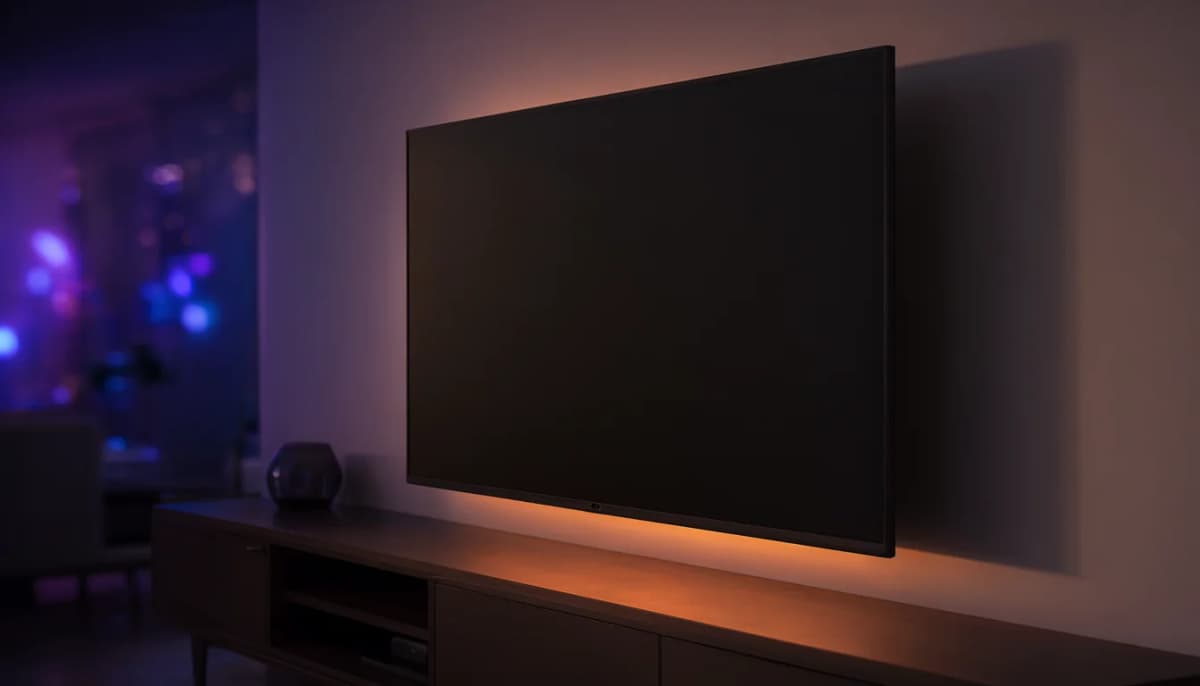
For a TV wall with nothing showing, three things go in the wall: power behind the screen, the HDMI in a conduit so it can be replaced, and an opening behind the soundbar. Decide where the TV and soundbar go before the first visit. That matters more than anything else.
If the wall is open for a remodel, all of it goes in before drywall. If the wall is finished, you can still get the same look.
In a finished room we fish the cables from the attic or from below. Where we have to cut, openings are kept to single or double gang size so they can be covered with plates. We don't patch or paint. The outlet behind the TV is a real outlet, not a cord pushed through the wall.
Hiding the soundbar wires
A soundbar needs two things: its own power and one HDMI cable to the TV's eARC port. With no opening behind the bar, both hang in the gap between the bar and the screen. That gap is the first thing you see.
So plan a second, smaller opening right behind where the bar will sit. The HDMI goes into the wall there and up to the TV.
Power is the part that needs a decision. An ordinary power cord or an extension cord can't go in the wall, however neatly it's done. So the bar plugs into an outlet behind it, or into the outlets of an in-wall power kit, or its cord stays visible. Pick one before the wall closes.
What you don't need is an optical cable to the bar. One HDMI cable on eARC carries the audio, Dolby Atmos included. Optical can't do Atmos. That's one more wire to hide for less sound, so skip it.
Where the recessed TV box goes
For the HDMI alone you don't always need a box. A brushed wall plate with the cable coming straight out is often the simpler answer. No jacks, no adapters.
Power is different. The box goes inside the outline of the screen, where the TV covers it completely. Decide that before rough-in, because once the drywall is up, moving it means another hole.
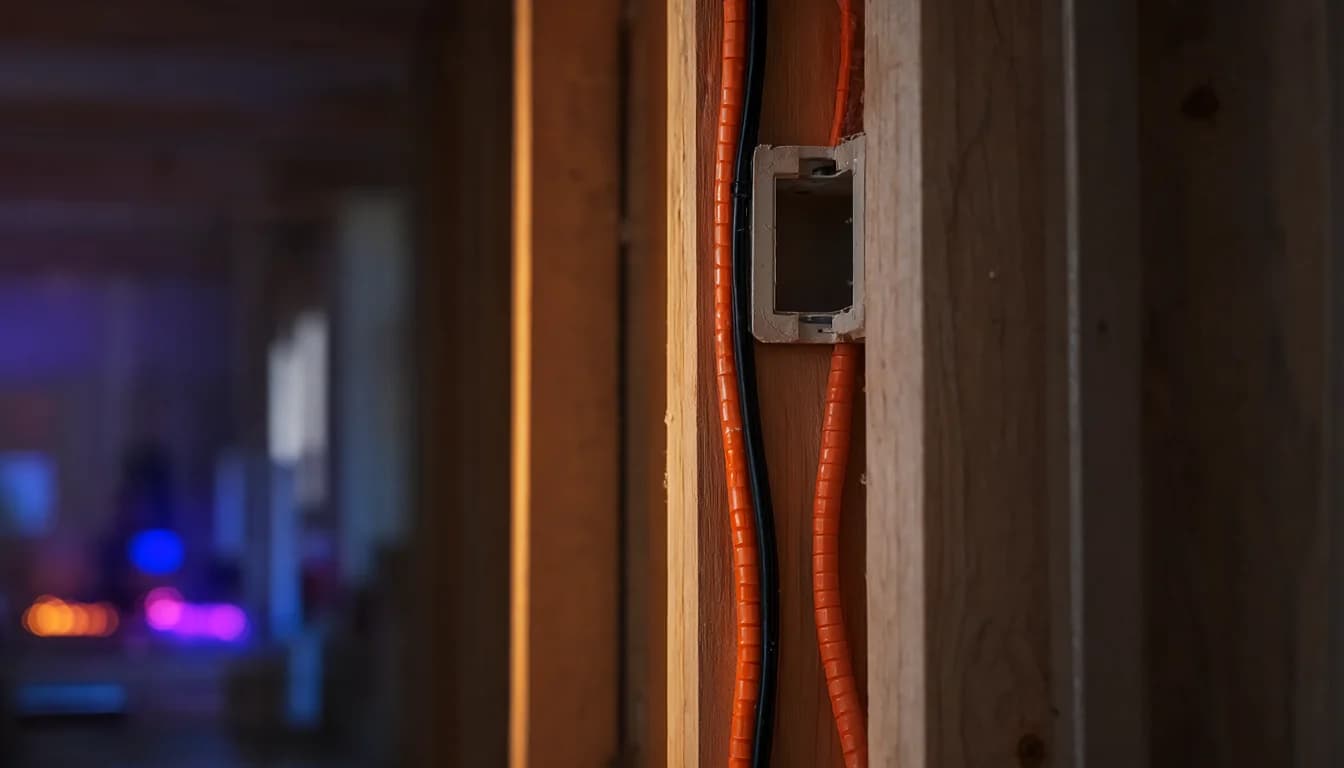
- A recessed box, not a regular outlet. A recessed TV box like the Arlington TVB613 sets the plugs back so they don't stick out past the wall.
- A power kit if a new outlet isn't in the plan. An in-wall TV power kit like Legrand's is a recessed box with two outlets and a cable opening behind the TV, fed by a short cord to an ordinary outlet lower on the wall. Legrand lists its kit at 10.25 by 8.75 inches, so check that it lands fully behind the screen. Whether a kit is enough or you want a real outlet is in our post on deciding where the gear goes.
A wall-mounted TV may need an outlet moved behind it. Because we do both low-voltage and electrical work, that can be part of the same project instead of a separate contractor visit.
In Seattle, a new outlet means an electrical permit and an inspection before the wall closes. The HDMI and network cable don't need one in a single-family house.
Conduit, so the HDMI can be replaced
The HDMI cable you put in the wall today is not the last one you'll want. HDMI cables have already changed once since 2020.
It matters more when the gear lives in a closet or cabinet and the run gets long. One cable maker says ordinary HDMI cable stops holding full speed past about 10 to 15 feet, and sells a different kind of cable for longer runs. A long run is exactly the one you don't want to fish twice.
So ask for conduit. We can put the conduit in now and pull the cable later.
What to ask about on the walkthrough:
- Will the plug fit? The conduit has to be big enough for the plug end of the cable to pass through. Ask about that.
- Network cable too. We recommend dedicated drops for televisions, along with gaming consoles and access points. Cat6 is plenty. You do not need Cat6a here. Our wiring services page covers the network side.
- The right label. HDMI cables are sold as in-wall rated. Buy one that says so.
In an open wall, the timing is simple. After framing and the electrical rough-in, before insulation and drywall, we run and label the cable. Then we come back to terminate, test and install equipment once finishes are done. We regularly work alongside GCs and designers. Deciding drop locations before that first visit matters more than anything else.
In a finished wall it depends on the path from the attic or from below. Ask whether that path can take a conduit. If a board blocks the inside of the wall, the drop moves over a bay, or the wall gets opened.
A mounted TV with a soundbar is a very different project from a dedicated room, and our audio-video page has the rest of what an AV job covers. You get a written estimate after the consultation.
Have questions about your project? Contact us for a free estimate.